Showing posts with label floods. Show all posts

Friday, December 6, 2024

IT DOES NOT HAVE TO BE THIS WAY

Over this weekend, once again communities across Wales which were hit hard by devastating floods following Storm Bert ( resulting in two landslides, damage to homes and businesses, and one known fatality ) now face Storm Darragh. Last week residents were taken by surprise with inadequate warnings and failing flood defences - particularly in the south valleys - but also in and around Newport and Monmouthshire.

While there is not much we can do about the weather, much of the flooding, chaos and the cleanup are not inevitable.  Labour in Wales initiated cuts to flood prevention alongside their refusal to learn lessons from previous storms - a decision that has left our communities vulnerable to (now much more commonplace) extreme weather. 

Plaid Cymru is calling for immediate emergency funding to help those impacted by the flooding alongside long term investment in resilient infrastructure and actual government accountability – not crowd funders. Protecting high risk communities and addressing coal tip safety are also urgently needed. 

After 25 years, Labour has utterly failed Wales and taken people for granted. No fairness from London - from the £4 billion owed in HS2 cash to fair funding to control over our natural resources. And no ambition from Cardiff – just more decline in our NHS, economy, and public services and our nation needs a fresh start. 

Giving Labour in Wales a second chance after the mess they have made is not an option, to put Labour in Wales back into power in May 2026 simply means more of the same. Wales deserves a fresh start with a new Plaid Cymru government.

Only Plaid Cymru will give Wales a fresh start. After 25 years of Labour in power, we have the longest waiting lists on record, falling educational standards and an economy not realising its potential. It’s time for a new Plaid Cymru government, full of ambition and energy, to improve our NHS and schools, create jobs and grow the economy - putting Wales first to build a fairer society for all. Roll on May 2026.

Sunday, August 14, 2022

THE URBAN SPONGE

Oddly enough as we quietly toast in the final days of the latest heatwave - we find ourselves awaiting the rains - and as sure as day follows night - the floods. Heavy at times torrential downpours on parched solid soil can result in localised flash flooding - it's happened before and it will happen again. Part of the problem is that our infrastructure cannot cope with the runoff and the sheer volume of water. 


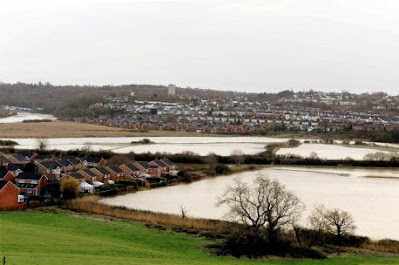
A near miss in Newport in 2016

In a warmer wetter world heatwaves and flood events are going to become more common - we need to build into our communities the resilience to cope with flooding.  We need to think and act smarter, and shift the focus from flood prevention to flood avoidance. Our communities, our nation and our world are becoming more prone to extreme weather, torrential downpours and periods of warmer or hit dry weather. 


Dealing with the consequences of this on a marco level is one thing.  Small relatively simple steps to store water for later use, with water butts (if only to water garden plants and vegetables) can make a very practical if minor use of excessive rainfall and runoff if only very locally.  Aside from helping to save water and to cut water bills.


Local water storage and management is increasingly part of intelligent urban design, something that is becoming more common and necessary in a warmer wetter world.  On a larger scale this is something we will all have to do, naturally some people and nations are a head of the curve when it comes to re-engineering their infrastructures to deal with extreme weather events. 


The concept of the sponge city or urban sponge something that is embedded and central to urban planning should now be coming into its own, particularly in Wales, with our urban areas being redesigned or designed from the start to soak up, and store deluges of torrential rain to prevent damaging and dangerous flash flooding but without the construction of large scale flood defences.  


The Dutch, for historical and geographical reasons have been involved in serious water management for centuries. Yet in a warmed world, even the Dutch are having to take long hard fresh look at how they deal with the consequences or severe weather and more regular flooding along with a rise in sea levels. 


Many urban areas have developed with any serious co side ration of the impact of flash flooding - back in July 2021, in localised parts of London heavy torrential downpours saw local drainage systems overwhelmed - as streets became rivers, homes and businesses were flooded and public transport ( including trains and tubes ) brought to a standstill. In London, heavy rain, which fell on hard surfaces, overloaded drainage and severe flooding resulted. 


There is certain a case that it if happens on London, then Westminster, at least in the short term cannot ignore it, if it happens outside of London then it’s another matter. In Pontypridd the existing flood defences were overwhelmed more than once simply being in poor condition and unable to cope with the sheer volume of water. 


Now elsewhere things are done differently - the sponge city concept has been embraced in parts of Berlin, were green roofs have been created with living plants, mosses and grasses, with plants Boeing on vertical walls, with courtyards planted with vegetation, etc - all of which helps to hold and slow excessive water. One beneficial side effect, if that the retained water helps to cool local neighbourhoods as the water evaporates from vegetation and the ground. 


In the Netherlands, the concept of making room for the river has been embraced to give space for flooding, something which slows the speed of riverine flooding. In Amsterdam, they have constructed rain gardens which have been created from parking areas, which are designed to collect water, people have also been encouraged to remove paving from their gardens, to grow plants and to build ponds to help with runoff and water storage. 


In the city of Rotterdam, public places have been turned into what are called water plazas which turn into shallow lakes during periods of heavy rain, when times are drier these locations are used as public parks and playing fields. Underground car parks have been redesigned or specifically built so that lower levels can be used to store storm related flood waters - which can then be pumped dry when water levels have dropped. 


These concepts are only slowly being looked at a adopted within these islands, we still tend to defy logic and build on flood planes, but, tend not to harden infrastructure of buildings ( commercial and domestic ) or to build with flooding in mind  e.g. build smart using ground floors for storage or parking and raise plug and power points, protect utilities and drains, and put washing machines, fridges sand freezers up off the ground. 


Some urban areas, within these islands, have slowly begun to adopt the concept, there are examples in Llanelli and at West Gordon Park, near Manchester - where porous pavements, shallow depressions, grass berms and small ponds help to absorb and direct surplus water into rain gardens or natural sumps or green spaces that double up as parks in drier periods. 


These are small steps, in a warmer, wetter world with more erratic and extreme weather events the problem of flooding will only get worse. As homeowners pave over their gardens for parking spaces the problem will worsen. The concept of the urban sponge is one that we all need to embrace, along with smart design and smart water management to help to reduce or alleviate urban flooding or we are going to be living with the consequences.  

Monday, August 30, 2021

THE URBAN SPONGE

We need to build into our communities the resilience to cope with flooding - sadly in a warmer wetter world - flood events are going to become more common - we need to think and act smarter, with shifting the focus from flood prevention to flood avoidance. Our communities, our nation and our world are becoming more prone to extreme weather, torrential downpours and periods of warmer or hit dry weather. 


Dealing with the consequences of this on a marco level is one thing.  Small relatively simple steps to store water for later use, with water butts (if only to water garden plants and vegetables) can make a very practical if minor use of excessive rainfall and runoff if only very locally.  Aside from helping to save water and to cut water bills.


Local water storage and management is increasingly part of intelligent urban design, something that is becoming more common and necessary in a warmer wetter world.  On a larger scale this is something we will all have to do, naturally some people and nations are a head of the curve when it comes to re-engineering their infrastructures to deal with extreme weather events. 


The concept of the sponge city or urban sponge. something that is embedded and central to urban planning should now be coming into its own, particularly in Wales, with our urban areas being redesigned or designed from the start to soak up, and store deluges of torrential rain to prevent damaging and dangerous flash flooding but without the construction of large scale flood defences.  


The Dutch, for historical and geographical reasons have been involved in serious water management for centuries. Yet in a warmed world, even the Dutch are having to take long hard fresh look at how they deal with the consequences or severe weather and more regular flooding. 


Many urban areas have developed with any serious co side ration of the impact of flash flooding - back in July, in localised parts of London heavy torrential downpours saw local drainage systems overwhelmed - as streets became rivers, homes and businesses were flooded and public transport ( including trains and tubes ) brought to a standstill. In London, heavy rain, which fell on hard surfaces, overloaded drainage and severe flooding resulted. 


Elsewhere things are done differently - the songs city concept has been embraced in parts of Berlin, were green roofs have been created with living plants, mosses and grasses, with plants Boeing on vertical walls, with courtyards planted with vegetation, etc - all of which helps to hold and slow excessive water. One beneficial side effect, if that the retained water helps to cool local neighbourhoods as the water evaporates from vegetation and the ground. 


In the Netherlands, the concept of making room for the river has been embraced to give space for flooding, something which slows the speed of riverine flooding. In Amsterdam, they have constructed rain gardens which have been created from parking areas, which are designed to collect water, people have also been encouraged to remove paving from their gardens, to grow plants and to build ponds to help with runoff and water storage. 


In the city of Rotterdam, public places have been turned into what are called water plazas which turn into shallow lakes during periods of heavy rain, when times are drier these locations are used as public parks and playing fields. Underground car parks have been redesigned or specifically built so that lower levels can be used to store storm related flood waters - which can then be pumped dry when water levels have dropped. 


These concepts are only slowly being looked at a adopted within these islands, we still tend to defy logic and build on flood planes, but, tend not to harden infrastructure of buildings ( commercial and domestic ) or to build with flooding in mind  e.g. build smart using ground floors for storage or parking and raise plug and power points, protect utilities and drains, and put washing machines, fridges sand freezers up off the ground. 


Some urban areas, within these islands, have slowly begun to adopt the concept, there are examples in Llanelli and at West Gordon Park, near Manchester - were porous pavements, shallow depressions, grass berms and small ponds help to absorb and direct surplus water into rain gardens or natural sumps or green spaces that double up as parks in drier periods. 


These are small steps, in a warmer, wetter world with more erratic and extreme weather events the problem of flooding will only get worse. As homeowners pave over their gardens for parking spaces the problem will worsen. The concept of the urban sponge is one that we all need to embrace, along with smart design and smart water management to help to reduce or alleviate urban flooding. 

Monday, February 22, 2021

FOCUSING ON FLOOD AVOIDANCE

We need to build into our communities the resilience to cope with flooding - sadly in a warmer wetter world - flood events are going to become more common. Over the weekend some 27 flood warnings were issued for Wales. Over the last five years the Welsh Government has invested more than £390 million to manage flood risk. The  severity and frequency of flooding events means that flood prevention needs to become a strategic national priority.


Both the Welsh and Westminster Governments need to make rational long term sustainable choices when it comes to flood defence. We in Wales need to develop a comprehensive planning system for our country that hardens our communities and infrastructure against the effects of severe weather events.   We need to focus on flood prevention and develop flood preventative schemes rather than end up clearing up after the flood is over again and again.


As our winters and our summers become warmer and wetter we will see more instances sea and riverine flooding, persistent bad weather has meant that some of our communities have had some pretty close calls and other communities have been badly inundated (again). There can be no blank cheque for flood defences so we need to make rational cost effective sustainable choices when it comes to flood defence whether for coastal or riverine flooding on the Gwent levels or the Ebbw, Wye, Usk or Monnow valleys. 


The debate taking place around flooding needs to focus on re-engineering the whole water system in Wales to ensure that water is retained in the uplands to prevent downstream flooding. Here in Wales, those agencies responsible for our environment need to take the lead and work to ensure that potential flood waters are retained our uplands for longer and flood prevention avoidance schemes are comprehensively built into our planning system.


A close call near Caerleon, near Newport in the lower Usk Valley in 2016

A close call near Caerleon, near Newport in the lower Usk Valley in 2016


Where possible we should avoid building in those areas that are particularly vulnerable to flooding or at least when building to take into account the possibilities of flooding. If we are going to build on flood plains or other areas that are vulnerable to flooding then we must use flood resistant or at the very least flood hardened modern intelligent design techniques to limit potential damage, loss and inconvenience as are used elsewhere. The on-going Dutch programme - Room for the River shows what’s possible.


We can be constructively innovative when we want to - the Welsh Government had previously given “indicative approval” to the Upper Conwy project. The purpose of the project is to assist in the storage of flood waters in the upland by slowing water flows through the restoration of moors, and it includes ditch blocking and river restoration. The cooperative project is spearheaded by Natural Resources Wales and the National Trust, with an agency official seconded to the Trust to push the work forward. Similar schemes have been developed in the north of England - this is good practice and we need much more of this.