Saturday, March 18, 2023

Daniel Llewellyn

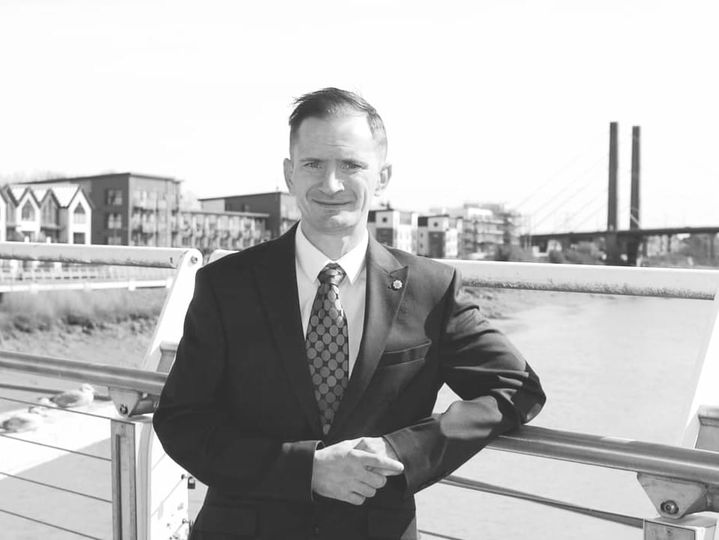
Some sad news today, as we have heard that Daniel Llewellyn, who was our candidate for the Newport East constituency for the Senedd Elections in 2021, has passed away aged 36. Our thoughts and best wishes are with Daniel’s family at this difficult time. 


Thursday, February 2, 2023

A MOMENT OF CLARITY

The recent demise of the former Conservative Party Chairman for being caught out with problems with his tax returns ( to be generous ) should have provided one of those moments of clarity, if ever one was required. If we had not worked it out before, then it should be clear that somewhat blatantly there is one set of rules for the rich elite and one for the rest of us - particularly when it comes to taxation. 


Basically if you have more money than you can comfortably count, then you are wealthy enough to pay someone else to count it and to look after it and to protect your money from taxation. The largest penalty to be paid ( aside from politically ) will be the social one, in that the former Conservative Party chairman got caught, which is embarrassing socially amongst the elite. 


Now it is fair to say that one reasonable definition of taxation is that it’s the fair dues we all pay to participate in a functioning society. Our taxes can be used to fund projects (significant and not so significant) that benefit us collectively and to provide a safety net for society. 


Tax is and probably always will be (and probably always has been) a subject that stirs people up on both sides of the electoral divide within these islands. For most of us taxation, regardless of level, is not a choice, our tax contributions are largely deducted at source, when we get paid, so we don’t have the luxury of choice in the matter nor the luxury of paying someone else to look after our money. 


Now when it comes tax, the Party formally known as New Labour, the Conservatives and the neo Liberal Democrats have all been hooked on the illusionary idea that either by cutting, reducing taxation for the rich (and corporations) or even perhaps by turning a blind eye to tax evasion, avoidance, etc - that wealth will trickle down from the top to the rest of us. The problem is that wealth just simply does not happen… it stays with the wealthy. 


This questionable theory was pumped out by Ronald Reagan (and Mrs T) in the 1980’s is still remains  largely dominant amongst right wing libertarians; yet it was not a new theory. US Presidential candidate William Jennings Bryan (in 1896); who noted ‘that if you will only legislate to make the well-to-do prosperous, their prosperity will leak through to those below’. 


The ‘Trickle-down theory’ first appeared in the 1932 US Presidential campaign, when Democrats used it to hammer Republican Herbert Hoover’s plan to engineer economic recovery by making the rich richer.  An election that saw the election by a landslide of President   Franklyn D Roosevelt and saw the emergence of the New Deal - which saw massive state intervention as the US economy was restructured and rebooted. 


Some fifty years later even Ronald Reagan’s supporters struggled to sell the idea to their own party, even George Bush (Senior) mocked Reagan’s theories of supply-side economics as ‘voodoo economics’ at least until he got the Vice Presidential slot. On this side of the pond there were even some monetarists who told Mrs T straight that the idea was nonsense and that it would not deliver results  - naturally she did not listen.


Across the pond, Reagan’s first budget brought in a moderate reduction in the basic tax rate, this was followed by the a drastic reduction of the top tax rate from 70 to 50 percent and later still to 28 percent. If the theory was correct then, the public coffers should have swelled with enough extra revenue to balance the budget within one to two years. 


Unfortunately, the theory was incorrect, within the eight years of Reagan’s Presidency the total Federal deficit soared from around $900 million to some $3 trillion dollars. What followed has been described as an orgy of speculation in stocks, shares and real estate (this was the era of ‘Greed is good’), ordinary Americans stopped saving and started spending. 


Through the 1980’s there was a near continuous decline in long-term capital investment – on which economic growth and jobs were dependent.  To make matters worse the USA went into recession and the Federal Reserve had to raise interest rates to hold down the inflationary consequence of the tax cuts, by 1981/82 unemployment in the USA rose about 10% for the first time since the aftermath of the great depression in the 1930’s.


The gulf between the wealthy elite and the rest of the population became a chasm, the rich got richer and parallels have been drawn between the 1980’s and the Gilded Age of the 1870’s (income tax was abolished in the US and was only reintroduced during the First World War).  


The 1980’s for the mega rich in the USA was an era of conspicuous consumption and extravagance – yet oddly enough very little of this prosperity tricked down to the American middle and working classes who have become poorer. 


Interestingly enough average US family incomes did not return to the level they were at in the 1970’s until 1987 – wile this may have sounded good, the harsh economic reality was that Americans were now working harder and longer – in 1973 an average American worker had 26.2 hours of leisure time per week, by 1987 this was down to 16.6 hours per week and it’s fallen still further. 


One result was that jobs were also now less secure, Americans now worked on short-term of temporary contracts in increasingly un-unionised working environments - something that was also mirrored on this side of the pond. For blue-collar workers the 1980’s were a disaster, wages fell through the decade as employers threatened to move production overseas (in the 2000’s they did) because the workers had priced themselves out of employment.


The neo liberal / neo conservative right wing, in the US and here in the UK crowed about how government should not interfere with (or regulate very much) the ‘free market’.  This hands off attitude was also duly applied to the US savings and loan industry, laying the groundwork for the collapse that was to follow in 2007. 


The only exception to the non state interference rule being that when things went really pear shaped ( and the bankers nearly crashed the US and world economies ) then obviously it was expected that Government would collect the tab. One side effect of all this was fraud, 650 savings and loan companies collapsed, with the $1.4 trillion dollar tab being picked up by the US government.


On this side of the pond, building society after building society were floated on the stock market – and within a few years were readily absorbed by increasingly greedy banks.  In the US, exploitative working practices and sweatshops reappeared encouraged by the effective withdrawal of regulation and inspection. 


The 1980’s also saw the growth of increasingly powerful media empires and a concentration of power in fewer and fewer hands despite much reputed mantras from government about greater competition and choice for consumers. More and more money drifted offshore particularly in these islands and keeping track of it became more and more difficult.


We are all still living with the consequences of that period in the 1980’s when an ideologically driven obsession with the ‘free market’ and ‘privatisation’. Heaven help anyone who dare question these sacred truths – the very heavens may fall. The problem is that the market was rather than being ‘free’ it was pretty much increasingly unregulated as Governments in the USA and the UK largely looked the other way – tax collections fell and ironically tax evasion soared.


This state of affairs was tolerated by the long time dying and distracted Major Government and largely encouraged by the former New Labour governments of Tony Blair and Gordon Brown and barely mentioned by the previous Con Dem government. Even the crash did not change things - there was some talk about tacking tax evasion which was matched by continuing (significant) staff cuts to HMRC - justified by the harsh financial necessities of austerity.


It is interesting because tax evasion and tax avoidance, at least outside of the UK, is often rarely out of the headlines with many heavily indebted governments being particularly keen to hunt down every tax dollar / euro / pound that is owed by tax evaders avoiding (unlike the rest of us) paying their fair dues to society. 


The Westminster elite privately at least regardless of whatever they say publically, appear to pay scant respect to the idea of fair taxation and fair representation, we now appear to be as close as possible to being governed by the sons of bankers and the sons of the City in the interests of the City (of London).


In the belly of the Westminster beast lies the City, which may explain why the former New Labour government, the former Con Dem coalition government and the current now unrestrained Conservative government ( currently we are on version 4 - since 2019 ) have been and remain very reluctant to do anything about the problem as some (but not all) of the city banks are hand in glove with drug dealers, dictators, oligarchs, rogue states and terrorists when it comes to money laundering. 


Now this inertia may be explained by the lure of comfy lucrative seats on the board for former Westminster politicians. There is something else, while the budget may be about feeding bankers and the City, it’s consequences may well have banished the illusion that the Conservative Party is even remotely economically competent - shattering this myth has taken almost as long as it has taken to expose the Westminster establishment’s cozy relationship with state aided and abetted tax evasion. 


This is the real problem in that all UK Westminster Governments ( whether under Thatcher, Tony, Gordon, Dave, Teresa, Bozo, Truss and Sunak ) pretty much since the end of Empire, have remained in it up to their necks when it comes to what has become state sanctioned tax evasion. 


The problem is that the Westminster government continues to be indirectly yet heavily involved in aiding and abetting tax evasion. British Overseas territories, including the Cayman Islands, continue help to hide trillions of dollars from many nation’s tax authorities, and until the questionable relationship between Westminster and the City of London.
Wednesday, January 25, 2023

HOLOCAUST MEMORIAL DAY 2023

This Friday (27th January 2023) is Holocaust Memorial Day, which is commemorated each year on the 27th January because this is the day when the Red Army liberated Auschwitz-Birkenau, the largest Nazi death camp.  


Perhaps now, more than ever, we need to take time to remember the millions of people who have been murdered or whose lives have been changed beyond recognition during the Holocaust, Nazi Persecution and in other subsequent horrors which have followed in Cambodia, Rwanda, Bosnia, Darfur and in Syria.


We should also forever remember the earlier genocides that inflicted on the Armenians and the Ukrainians.


It is only right and proper that we honour the survivors and continue to challenge ourselves to use the lessons of their experience to inform our lives today.


By the end of the Holocaust, six million Jewish men, women and children had perished in ghettos, mass-shootings, in concentration camps and extermination camps. 


As Allied troops made progress across Nazi-occupied Europe, they began to uncover concentration and extermination camps and the remains of camps. 


The camp of Majdanek in Poland was the first to be liberated, in summer 1944.


Faced with defeat and advancing Allied armies Nazi forces burnt the crematoria and the mass graves in attempts to hide the crimes that they had committed. 


The Operation Reinhardt camps of Sobibor, Belzec, and Treblinka were dismantled by the Nazis from 1943, and Auschwitz itself was evacuated in late 1944. 


The surviving prisoners, weak from starvation and ill-treatment, and poorly clothed against elements were forced to walk into the interior of Germany, away from the Allied armies, many thousands died on the enforced ‘death marches’. 


Soviet soldiers liberated Auschwitz-Birkenau on 27th January 1945,  they found several thousand emaciated survivors, and the smouldering remains of the gas chambers and crematoria. 


In the following months, the Soviets liberated Stutthof, Sachsenhausen and Ravensbruck.


In the west, US troops liberated Buchenwald in April 1945, followed by Flossenburg, Dachau and Mauthausen. British Troops liberated Bergen-Belsen on 15th April 1945. 


It is estimated there were over 60,000 prisoners in Belsen by April 1945. Approximately 35,000 prisoners died of typhus, malnutrition and starvation in the first few months of 1945.


In 1999, Jewish leaders, were once asked by Tony Blair (the then UK prime minister) whether we needed Holocaust Memorial Day in Britain? 


Jonathan Sacks (former Chief Rabbi of the United Hebrew Congregations of the Commonwealth for 22 years, until 2013) noted that that, when it was proposed that the UK have a Holocaust Memorial Day, Blair wanted the opinion of British Jewish leaders. 


They explained that they did not need a specific day to remember as Jews.


When it comes to remembrance Jewish people already had Yom ha-Shoa, their own memorial day, which falls soon after Passover in the Jewish calendar. 


Every Jew literally (or figuratively) lost family in the Holocaust. For Jews, Yom ha-Shoa is a grief observed. 


The Jewish leaders said that the Holocaust was not just a crime against Jews and other victims – Roma, Sinti, homosexuals, the handicapped, Jehovah’s Witnesses and political opponents of the Nazi’s among them; it was an assault on all of humanity.  


As has been said previously by a survivor perhaps we need is an additional eleventh commandment along the lines of – Don’t be bystander!  

Thursday, November 17, 2022

AUSTERITY 2.0

Austerity the first time round, was a political choice, an unnecessary one, made by the Liberal Democrat - Conservative Coalition Government - partially driven by a libertarian agenda of reducing the state to a bare minimal and an abject failure to deal with evaded tax ( admittedly difficult if you went to the same school with some of the tax evaders and know them socially ) and by the consequences of the bank collapse. 


This time round it’s entirely a political choice off a Conservative Government and it’s also unnecessary and it has a vindictive edge to it - partially driven by a desire to wreck the state and the agencies of the state to the point where even if Labour won two terms back to back with large majorities they would not be able to put it back together - even if they wanted to. 


Worth noting that austerity the first time began for the public sector under a Labour Government - the last of successive Labour governments (much like successive Conservative Governments since) also entirely failed to deal with the problem of evaded tax… and the tax havens of off shore money laundering centres… Austerity is an easier choice for the Conservative Government and Party than dealing with the problem of tax evasion and tax avoidance. 


Wednesday, November 9, 2022

REMEMBERANCE 2022

Another remembrance Sunday approaches, another one under the shadow of Covid. On Friday 11th November, at 11am it will be one hundred and four years to the moment when the Great War - at least on the Western Front, then the fighting was brought to an end with the armistice. 


A few years ago we reached that point in time, where there were no more living veterans from the First World War, yet people will still pause to publically and privately remember the veterans and survivors of more historic and more recent conflicts and particularly those who never came back. 


The 947,023 military casualties (with 744,702 of them from these islands) between 1914 and 1918 (by way of comparison with the 264,000 military dead from 1939 - 1945) should still shock us even now.  My family like far too many others in Wales (and elsewhere on these islands) had relatives who served and survived and also relatives who lost their lives in the First and Second World Wars and other subsequent conflicts. 


My lost relatives (and their missing descendants) from time to time, play on my mind, particularly at times like this - one of my maternal grandmother’s lost two brothers in the First World War and its aftermath. Her elder brother was a regular soldier, who wrote home and told them not to allow his younger brother to join up and to come out to France. 


Sadly it was, however, too late as the younger brother had already joined up was killed in action in 1918 and buried near Amiens. My paternal great grandfather (and my grandfather) both served in the First World War and survived but came back as deeply changed men (as did many).


As someone, coming from a relatively large extended close family, I am of an age, that I grew up with a generation of older relatives a number of whom had seen active service in the second world war in the Navy, Army, Air Force and the merchant navy. 


They like many from those generations rarely talked about their actual experiences of the war, and then perhaps save only occasionally to those whom they had served with, who would have understood, because they had survived similar experiences. Younger relatives have also served in more recent more modern conflicts around the world and fortunately have come back. 


As I have said previously I have absolutely no problem remembering those who lost their lives and the courage, comradeship and their endurance of those who served in the First World War and other more modern conflicts (and not necessarily those who served in the armed forces). 


I have no time whatsoever is rose tinted sentimental nostalgic flag waving foot-tapping pap. As has been said elsewhere, soldiers don’t go into conflict aiming to die - not for the politicians, for patriotism or even us - but they often can end up dying with their friends and comrades with whom they served. 


The first world war was the first conflict when real concerted efforts were made to remember and record all of those who had fallen - particularly because of the decision (taken for a variety of reasons) not to bring the fallen home for burial. One consequence is that far too many literally still lie in corners of foreign fields, are names on war memorials, faded photographs, faded memories or too many literally have no grave at all. 


Speaking of another bloody conflict across the Atlantic, the, US President Abraham Lincoln noted at Gettysburg the fallen had given their last full measure of devotion. And that what we do or say does not really matter in comparison with what the fallen (and those who survived) had done. It may be more true today that the world will little note the current crop of political leader’s lyrical wittering on conflict (both recent or older) or long remember them. 


What we should never forget what the former soldiers and veterans did and what they went through and too many still live with. We should not just cherish their memory but should ensure that after their military service they remain fully honoured as should be the military covenant. Never again should it ever be found that dead heroes are cheaper to honour than live ones. 

Monday, October 31, 2022

PERHAPS NOT BUSINESS AS USUAL

There has been an interesting report from the International Energy Agency (IEA) that suggests that Russia's invasion of Ukraine will have long-lasting effects on energy supply and markets, a new report suggests. The IEA states the world faces its first "truly global energy crisis" as a result.


The report also noted that unaffordable energy bills remain a huge problem, driven up as the exports of oil and gas have been restricted.  The IEA suggests that energy crisis should also be seen as a turning point, speeding up the world's transition to green energy. 


"With unrelenting geopolitical and economic concerns, energy markets remain extremely vulnerable, and the crisis is a reminder of the fragility and unsustainability of the current global energy system. The heaviest burden is falling on poorer households where a larger share of income is spent on energy", the report warned.


The Paris-based agency calculated the value of government spending to protect customers from price rises currently stands at $550 billion  (£473 billion) worldwide, and is set to rise further, particularly in the UK and Germany. The IEA said the most effective policies to protect customers from the impact of soaring costs, and changing energy infrastructure, had been introduced by the likes of the US, Japan and Korea.


The IEA also cited the REPowerEU scheme, which aims to make European Union (EU) countries independent of Russian energy by 2030. The IEA predicts that Russia's share of global energy trade will fall from 20% currently to 13% by 2030. The report also said that for the first time ever, its forecasts - based on current prices and government policies - showed that global demand for every fossil fuel will either be peaking or reaching a plateau.


"[We predict] coal use falls back within the next few years, natural gas demand reaches a plateau by the end of the decade, and rising sales of electric vehicles (EVs) mean that oil demand levels off in the mid-2030s before ebbing slightly to mid-century", it concluded.


Although the UK and Europe's sanctions on Russian oil imports did little to dent demand from India and China this year, it found that the conflict in Ukraine had sped up investment in greener energy sources. The UK, for example, accelerated its spending on Direct Air Capture (DAC) technologies - a method of removing harmful carbon dioxide from the atmosphere.


Countries which have agreed to reach net zero, where they are not adding to the amount of greenhouse gases in the atmosphere, by 2050 include the UK, Japan, Korea, Canada and the EU. The report also cautioned, however, that in order to reach net zero emissions by 2050, clean energy investment would need to be above $4 trillion by 2030. At current levels, it is predicted to reach only half of that figure.


While the IEA isn't pulling its punches here: this is a global crisis, of unprecedented breadth and complexity, and despite the impact of Covid, it's essentially Russia's fault.


The report points out that while the pain is spread around the world - stoking the rising cost of living and creating inflationary pressures - it's the poor who will suffer the most because they spend more of their income on energy (and food, which is also made more expensive by high energy costs). Many will lose access to electricity altogether.


The IEA also believes the crisis is an opportunity, but, It does not accept at all to the idea that investment in "clean" energy such as renewables might be partially responsible for high prices. This IEA report sounds a call to arms: more investment is needed in clean tech, not less - and stronger policies will be required to secure the necessary investment.


The IEA claims will make energy more secure and more affordable and also suggests that fossil fuel use, which has climbed alongside economic growth since the industrial revolution, may soon peak - before settling into a decline.  


The problem is that the IEA's projection of demand for oil and gas is effectively a death sentence for the planet, with oil use to rise and then plateau in the mid 2030s, gas to rise before levelling off by the end of the decade. The IPCC are telling us that fossil fuels need to reduce by 45% to have any chance of remaining within 1.5°c of warming.


The Conservative Party (and recent Conservative government’s when not dismembering themselves over BREXIT) have always struggled with the concept of green sustainable energy ( in its various forms ) and choosing to put common sense before profit, let along struggling with the possibility of community beneficial energy production and ownership. 


Even with their periodic attempts at green washing, started by David Cameron petting a husky in the artic pre 2010, the whole idea has not sat well with the libertarian free marketeers. It’s is important to remember that it was the Lib Dem - Conservative coalition government who extended the UK’s reckless commitment to Nuclear energy ( with some very iffy commercial partners ) while making life much more difficult for the growth of sustainable green energy. 


Now we all know that Big energy has deep pockets and close links with fat divided profits at the City of London - which in turn has close links to some of the inhabitants of the Palace of Westminster. Boundaries are conveniently blurred - EDF ( a French State owned energy company ) won the contact to build a lucrative Nuclear energy plant - post the 2015 Westminster general election ( judgment day for the Lib Dems ) a former Lib Dem energy minister found a well salaried job with EDF…


The current Conservative Westminster government given half a chance will probably quite happily drop all the successive Westminster governmental commitments to renewables as quickly as a snowball would melt in hell. The previous but one PM was effectively stitched up by the fact the COP 26 was in Glasgow and difficult to ignore. 


The dropping of the COP26 post from the Cabinet, and the new PM’s decision not to go and the effective blocking of the King from going to the COP26 Conference in Egypt certainly sends a clear message that saving the planet ( and us ) and growing green energy is just not that important. Although the current PM is struggling to give himself some wiggle room to avoid a new PR disaster… which could result from non attendance… so much for business as usual… 

Sunday, October 23, 2022

GROW THE CASE FOR INDEPENDENCE

Plaid Cymru and Wales Green Party create Future Cymru Forum to grow case for independence


Leaders of the two leading pro-independence parties in Wales have announced the formation of a new Forum to grow the case for independence. The Forum will consult, research and develop a ground-breaking body of work to build a "bridge of ideas to the future". Plaid Cymru and The Wales Green Party will engage widely, working together to help build the economic, social and environmental case for an independent Wales.


Announcing the creation of ‘Future Cymru Forum’ at the party’s Annual Conference, Plaid Cymru Leader Adam Price said it was further evidence of a “genuine agenda of reaching out to others, across the party divide, to join hands to find a shared route to independence that will produce tangible benefits for all our people.”


The aim is produce outputs that will be inspirational but grounded in robust evidence and argument that complements and supports the work of other groups. The Future Cymru Forum project will focus on topics such as:


  1. Setting a framework for debate and research on economy in an independent Wales, taking note of new economy thinking, environmental value and wellbeing goals; 
  2. Creating an economic plan for an independent Wales in different social and political scenarios, risks and opportunities.
  3. Modelling the macro-economic impact of an independent Wales for a range of different scenarios, including forecasting of social and environmental value and GDP growth over first fifteen years.
  4. Modelling the public expenditure, contributions to the foundation economy, deficit and debt over the first fifteen years, under different tax and expenditure scenarios.
  5. Considering how an independent Wales could encourage a richer mix of viable business models to create environmental and public value
  6. Creating ambitious new financial instruments to fund investment in a new energy future for Wales and to tackle climate change.


Plaid Cymru leader Adam Price said:


"The Future Cymru Forum will ensure that the case for Welsh independence continues to grow, both economically and environmentally.


"Both parties recognise the need to explore the key questions surrounding independence more deeply, including the central question of how a new Welsh economy would work. In tough times, working together can turn things around. Our aim is to build confidence in a flourishing independent future for Wales.


"If we are to win independence for Wales we need as broad an alliance of possible who share the vision of a nation that is fair, inclusive, diverse and green. The Future Wales Forum is another step towards realising that vision and ensuring that Cymru's Future is in Cymru's hands."


"I strongly believe in a genuine agenda of reaching out to others, across the party divide, to join hands to find a shared route to independence that will produce tangible benefits for all our people.”


Anthony Slaughter, Wales Green Party leader said:


“I hope that the aims of Future Cymru Forum - to develop economic and environmental plans for an independent Wales - will convince, inspire and enthuse many people across our nation that vision can become reality.


“Working together, we can show positive and hopeful alternatives to the destructive agenda pursued by the Tories in Westminster that is damaging people and planet alike.


“As more and more people are persuaded by the idea of independence as a means of securing a fairer and greener future, The Wales Green Party looks forward to working with Plaid Cymru to undertake the important research required to ensure that the case for our nation to stand on its own two feet is more compelling than ever before.